A producer who wouldn't cut Fancy, a farewell album nobody knew was a farewell, and the longest #1 Alabama ever had.
September 4 · MCA Nashville
Her producer wouldn't cut it because it was about a prostitute. Then she switched producers.
Reba McEntire had wanted to record Bobbie Gentry's "Fancy" — the 1969 story of a teenage girl sent out of a New Orleans shack with one chance — since 1984. Her producer wouldn't let her.
"Oh, no. You don't need to do that. It's about a prostitute!"Reba McEntire, recalling Jimmy Bowen, then her producer and the head of MCA Nashville, to Garden & Gun
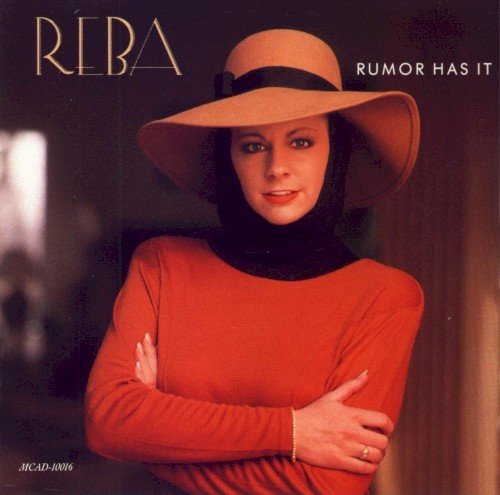
Bowen held that line for years. By 1990 he was gone from the label. McEntire had a new producer, Tony Brown — a pianist who'd once played behind Elvis Presley — and a newborn son, Shelby, born that February. Rumor Has It was their first album together.
Near the end of those sessions, Brown asked if there was an old song she'd always wanted to cut. She named "Fancy." It turned out to be his favorite song, too, and the session players responded to it — by his account, they were so locked into the track that they kept playing it long after it was finished, just to stay in it.
Rumor Has It reached stores on September 4, 1990. The first single, "You Lie," went to #1 that fall. "Fancy" wasn't pulled as a single until February 11, 1991 — five months later, and after two other singles from the same album — and it peaked at #8, never climbing as high as "You Lie" or the title track.
The chart peak undersells it. Taste of Country later called "Fancy" McEntire's most-played catalog hit at country radio, and she's said it's the one song in her show her fans can count on every single night.
She and Gentry have still never spoken. Asked about it for the album's 30th anniversary in 2020, McEntire said she kept asking people who'd worked with the notoriously private songwriter to pass along a message — she'd take an email, a text, or, she said, smoke signals.
Reba McEntire — "Fancy," written by Bobbie Gentry · Album: Rumor Has It (MCA, September 4, 1990) · Single peak: #8, 1991
The last Judds album arrived in September. Nobody knew it was the last one.
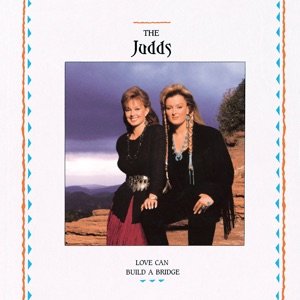
On September 11, 1990, RCA released Love Can Build a Bridge, the sixth studio album by Naomi and Wynonna Judd. The duo had fourteen #1 singles behind them and were in the middle of a four-year run (1988–1991) as the CMA's reigning Vocal Duo of the Year. Nothing about the record's arrival read as a farewell.
Naomi had been sick since around the New Year. She learned in 1990, at 44, that she had chronic hepatitis. By her own later account, she believed she'd picked up the virus years earlier, from a needle stick while working as a nurse — long before any symptom showed. She kept touring behind the new album and said nothing publicly about what she already knew was coming.
One song on that album carries a specific origin story — and it's not the one most people first hear about it from. Naomi invited songwriter Paul Overstreet to her house for dinner and laid out a problem: the Judds had a Coca-Cola–sponsored video shoot booked at the Grand Canyon, and no song to shoot it to. Overstreet started turning the canyon itself into an idea — people standing on opposite rims, different tribes, in love, needing a way across. Naomi already had a notebook of lyrics she'd been working on. Overstreet thought they were close but not finished, and went off to take his own pass at them. It was Naomi and pianist John Barlow Jarvis who ended up finishing the song together.
"Naomi Judd handed me a set of lyrics she had written which was inspired by a conversation she had with Paul Overstreet. I immediately heard a melody and wrote it in literally 15 minutes."John Barlow Jarvis, to Nashville Hype, as cited by Songfacts
The words and melody came fast; the record didn't. Jarvis has said they cut it two or three times before it felt right. "Love Can Build a Bridge," credited to Naomi Judd, Overstreet, and Jarvis, went out as the album's second single on December 3, 1990, and reached #5 on the Hot Country chart in 1991.
That's a different song, and a different writing session, from the one that actually opened the album's radio campaign. "Born to Be Blue," released as the first single back on August 6, 1990, was written by Brent Maher, Mike Reid, and Mack David — no Overstreet, no Grand Canyon, no Jarvis. It also peaked at #5, on the country chart in late 1990 — rare footing for a duo that had spent most of the decade living at #1, and the reason the two songs are so easy to blur together in hindsight.
Five weeks after the album reached stores, on October 17, 1990, Naomi stood in front of reporters in Nashville and said the only thing that had ever threatened to stop her from performing was her health — and that it had. The Judds worked a farewell tour through 1991, capped by a televised concert that December. "Love Can Build a Bridge," written months before anyone announced anything, became the closest thing in the catalog to a goodbye nobody saw coming when it shipped.
The Judds — "Love Can Build a Bridge," written by Naomi Judd, Paul Overstreet, and John Barlow Jarvis · Album: Love Can Build a Bridge (RCA, September 11, 1990) · Single peak: #5, 1991
The chart dated September 8, 1990, put Alabama at #1 with "Jukebox in My Mind." They were still there on the 15th, the 22nd, and the 29th — four weeks, the longest #1 run of the band's career.
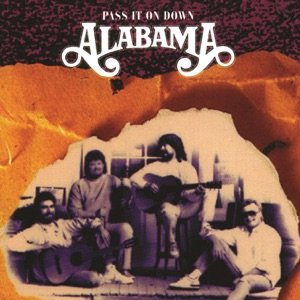
This was the group behind "Mountain Music" and "Feels So Right." Southern Star, the album before, had thrown off four straight #1s. Its follow-up's title track, "Pass It On Down," stalled at #3. Dave Gibson and Ronnie Rogers wrote what came next.
"…the boys of Alabama channel their inner Statler Brothers and go old-school, with their harmonies adorned with fiddle and steel that fit in perfectly with the records being made by Randy Travis and Alan Jackson at the time."Kevin John Coyne, Country Universe
Coyne's point was about timing. Alabama had built their name on a bigger, more pop-leaning sound; "Jukebox in My Mind" went the other way, landing just as Travis and Jackson were pulling country radio back toward fiddle and steel. The record even opens and closes on the sound of a quarter dropping into a jukebox and the needle finding the groove — a framing device that restarts the song each time it plays, the same trick artists from Madonna to Miranda Lambert would borrow years later.
In 1991 the Academy of Country Music nominated it for both Single of the Year and Song of the Year. It won neither. Single of the Year went to "Friends in Low Places," which took #1 the week of October 6, 1990 — Alabama had September, Garth Brooks had what came after. Song of the Year went to Tony Arata's "The Dance."
Alabama — "Jukebox in My Mind," written by Dave Gibson and Ronnie Rogers · #1 for four weeks, September 8–29, 1990
13'Til a Tear Becomes a RoseKeith Whitley & Lorrie MorganPeak 13Posthumous duet with his wife. Whitley died May 9, 1989. CMA Vocal Event of the Year in 1990.
Billboard Hot Country Singles & Tracks, week ending September 22, 1990. Peaks from Billboard chart history.
Every issue
You've probably forgotten…
Matraca Berg — Lying to the Moon
1990 · Sept. 1990 · RCA Nashville
36
Peak as a recording artist
50+
Songs of hers cut by other artists
2008
Year the Nashville Songwriters Hall of Fame inducted her
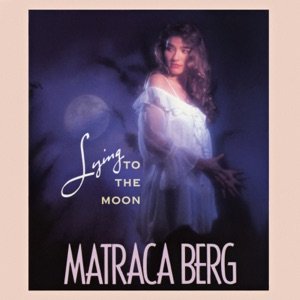
On September 25, 1990, RCA Nashville released Lying to the Moon, the debut album by a 26-year-old named Matraca Berg. She wasn't unknown — she'd already co-written a #1, "Faking Love," for Karen Brooks and T.G. Sheppard, when she was eighteen.
"Baby, Walk On," out since June, peaked at #36. The follow-up, "The Things You Left Undone," went to radio on September 8 and stalled at the same spot. The album reached #43 on the country chart. Producers Josh Leo and Wendy Waldman built it with oboe and cello alongside the usual banjos and fiddles; Leo later said there were no limits with Matraca.
Then other people started singing her songs. Trisha Yearwood cut "XXX's and OOO's (An American Girl)" and "Wrong Side of Memphis." Patty Loveless took "You Can Feel Bad" and "I'm That Kind of Girl." Deana Carter wanted "Strawberry Wine" as her first single — a five-minute waltz that, Berg told Rolling Stone, every other artist had already passed on.
"She was a friend of mine, so I was trying to talk her out of it because I wanted her to do well."Matraca Berg, to Rolling Stone
Carter was the only artist who'd even shown up to hear the song. Yearwood passed on it too. "Strawberry Wine" went to #1 and won CMA Song of the Year in 1997. Berg has had more than 50 songs recorded by other artists, and the Nashville Songwriters Hall of Fame inducted her in 2008 — one of the youngest inductees in its history. The singer RCA launched that September never had a top ten.
Matraca Berg — "Baby, Walk On," written by Matraca Berg and Ronnie Samoset · Peak: #36, 1990 · Album: Lying to the Moon, September 25, 1990